
Seminole County Arrest Warrants Explained
In Seminole County, an arrest warrant begins with a sworn complaint, not a phone tip. Under 22 O.S. §171, that complaint goes to a magistrate, who must find that an offense happened and that reasonable grounds connect the defendant. Only then does a warrant issue. A bench warrant is different. It comes later, after a missed court obligation. Municipal judges add another layer, because a city judge can issue local arrest process under the city code and Oklahoma municipal procedure, and that city case may stay with the municipal court without ever appearing on OSCN or the sheriff's Most Wanted page. Title 22 holds the official complaint and warrant framework for both paths.
22 O.S. §171 Starts With a Complaint
Think of the public sequence as complaint, magistrate review, warrant command, service, return, and the court follow-up that comes next. The statute itself offers no lookup by name. It sets no bond amount. It lists no surrender schedule. Those details live with the issuing court in Seminole County. The state places Seminole County in the District Court system, while municipal courts handle local ordinance and traffic matters, so a warrant search has to follow the right lane. The state court description lays out that court structure.
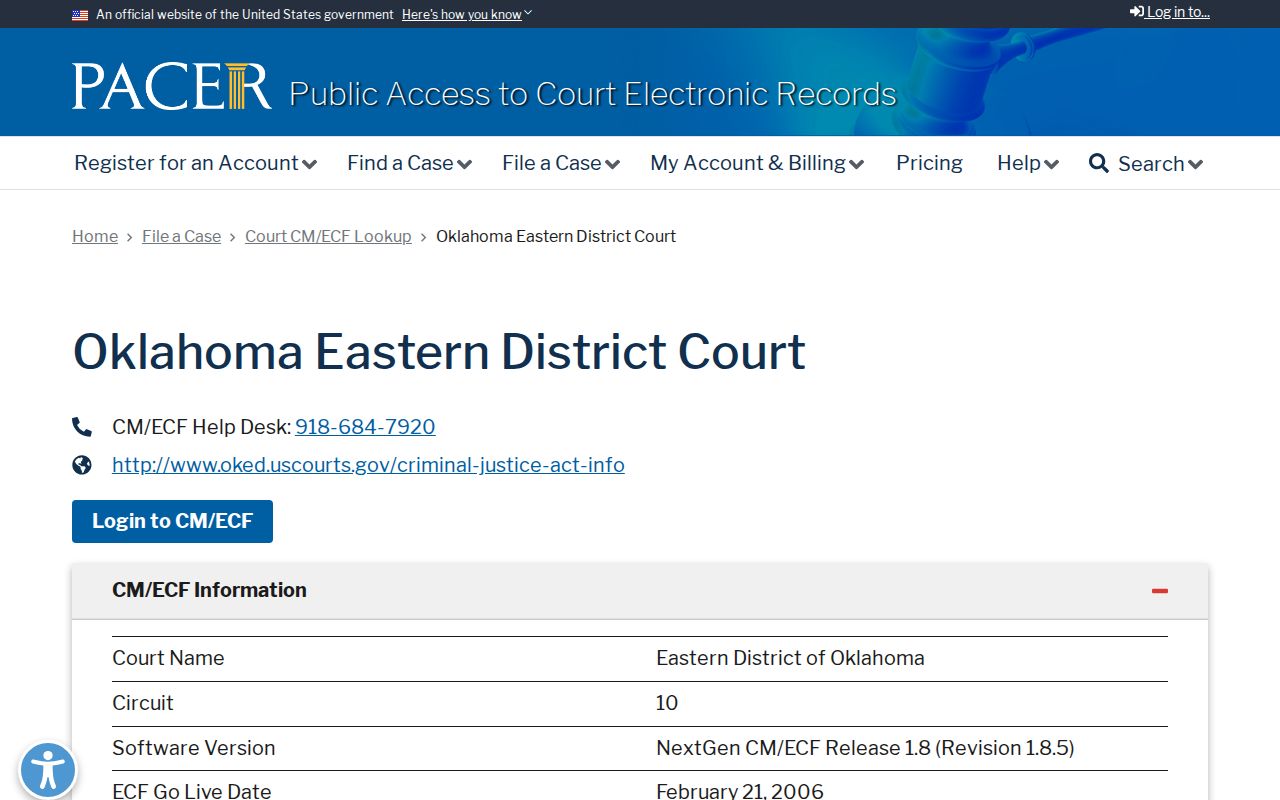
This civic frame is not a warrant document or a person record.
Inside a Seminole County Arrest Warrant
A warrant's paper trail has its own grammar. Ask for the issue date, service, return, bond, recall, and the next setting, in that order. A signed document at the Seminole County clerk's office carries more weight than any online event line.
| Issuing court | District Court, magistrate, or named municipal court. |
|---|---|
| Case key | Court prefix, year, sequence, or city citation number. |
| Process | Arrest warrant, complaint or affidavit reference, and issue date. |
| Offense | Charge or statute description, with classification when public. |
| Bond | Amount, type, conditions, no-bond flag, or judge instruction. |
| Return | Serving agency and served, returned, recalled, quashed, or other event. |
| Access | Online, clerk-held, protected, sealed, or juvenile limit. |
Use a format-only sample such as CF-year-number. Never copy a live name, birth date, alias, or bond card into a Seminole County records request.
OSCN and the Official Court File
With a District Court case number in hand, search OSCN by county, court, and case number. Watch for entries marked WARRANT. Bond, service, return, and recall events matter most. If the site says a document sits at the Court Clerk's Office, call (405) 257-6236 and ask for the official record and its current status. Know the limits first. OCCA Rule 2.6 calls OSCN a public convenience database, not the court's case-management system. A web event can help. It can also be incomplete. The Court Clerk lists 8:00 a.m. to 4:00 p.m. hours and a Wewoka mailing route, so call before visiting. The court access rule draws the line between the web view and the record that controls.
How Seminole County Arrest Warrants Are Served
Title 22 lets a sheriff, constable, police officer, or marshal serve process, depending on the order and local authority. No office publishes a county assignment table. The knock on a Seminole County door may therefore come from county deputies, city police, or a municipal marshal. For the county side, the Seminole County Sheriff's Office lists 211 E. 2nd Street, Wewoka, Oklahoma 74884, main phone (405) 257-5445, and jail phone (405) 257-6235. The Seminole Police Department sits at 900 N. Harvey, Seminole, and answers police and records questions at (405) 382-3434. One warning. These offices do not share one warrant database. The city police page breaks out patrol, dispatch, records, tickets, and court links.
Sheriff, City Police, and Marshal Routes
A Seminole County District Court arrest warrant can show up in OSCN, in the Court Clerk's file, and in a sheriff execution record. A city warrant is different. It sits with the municipal clerk and runs to city police or a marshal under local code. Maud's ordinance names its municipal marshal, a police member, or another authorized person as its executors. That wording stops at the city line. It is not a countywide assignment rule. Call the issuing court before any execution office. Ask which office holds the process, whether a bond or appearance is required, and what written proof follows service or release.
Arrest Warrants, Summonses, and Bench Warrants
The labels mark different starting points. A summons simply asks you to appear. An arrest warrant commands custody after a complaint and judicial review, while a bench warrant follows a missed appearance or other noncompliance in a Seminole County courtroom. A city citation can move through municipal warrant procedure without ever becoming a District Court arrest record.
| Process | Starting event | First confirmation |
|---|---|---|
| Summons | Notice to appear | Issuing court or clerk |
| Arrest warrant | Verified complaint and reasonable-ground finding | District or municipal court |
| Bench warrant | Missed required appearance or compliance event | Court docket and clerk |
Ask the clerk for the exact local label. Oklahoma sources do not make capias pro fine the standard Seminole County term.
Federal Process Stays Outside County Systems
A federal matter in Seminole County is not answered by OSCN, a city portal, or the sheriff's page. Seminole County sits in the Eastern District of Oklahoma. Federal dockets run through PACER and the federal clerk. The U.S. Marshals Service handles its own enforcement. Sealed federal warrant material may stay hidden. The Eastern District and PACER pages are routing sources, not a public federal warrant roster. For a real status answer, use the federal clerk, counsel, or the proper federal agency. The Eastern District PACER page provides the federal court route.
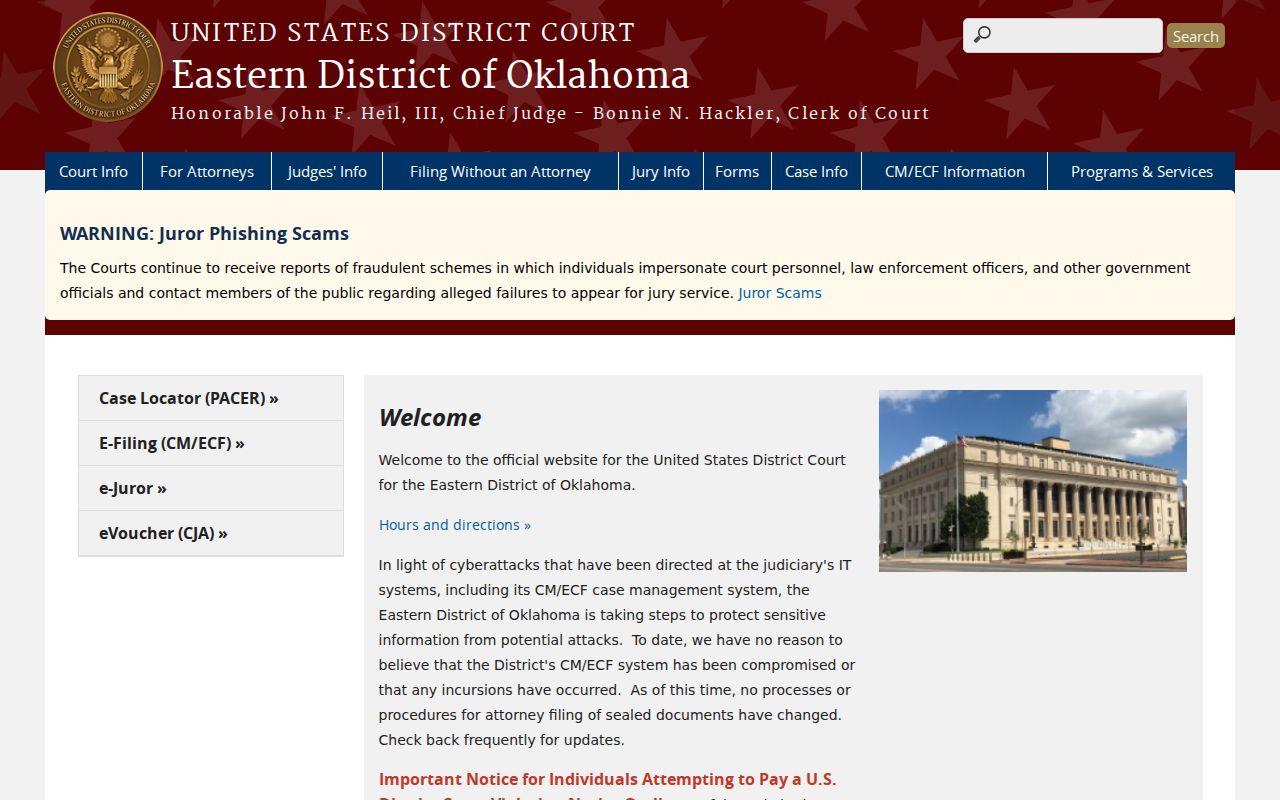
The federal frame shows jurisdictional routing, not an individual warrant result.
What to Do If There Is a Warrant
Call first. Phone the issuing court in Seminole County before you walk in. Ask whether counsel can set a hearing or a walk-through, and whether bond, a reset, personal-recognizance release, or a motion is on the table. Find out where surrender is directed. The sheriff posts no universal walk-in hours, accepted instruments, or bond schedule, so confirm those details by phone.
Act carefully: do not rely on a public-list no-result, and do not travel to the sheriff or jail without confirming the current location and procedure.
Indigent in a District Court criminal case? The Oklahoma Indigent Defense System explains that applications usually run through the judge, the clerk, the jail, or a pauper process. Keep every paper: orders, receipts, release documents, and each next court date. A warrant action in Seminole County does not end the underlying case on its own.
Confirm Served, Returned, or Recalled Status
When you ask the Court Clerk or a city clerk about status, get three things: the exact label that system uses, the date of the last event, and what action comes next. "Served" means process was executed. "Returned" means it went back to court with a result. "Recalled" or "quashed" means the court withdrew or set it aside. None of those labels alone tells you the charge is closed, so ask directly. If a public record is withheld in Seminole County, request the non-exempt disposition or a written reason under the Oklahoma Open Records Act. Also ask how long OSCN, the sheriff, a municipal account, or a DPS notice takes to reflect compliance.